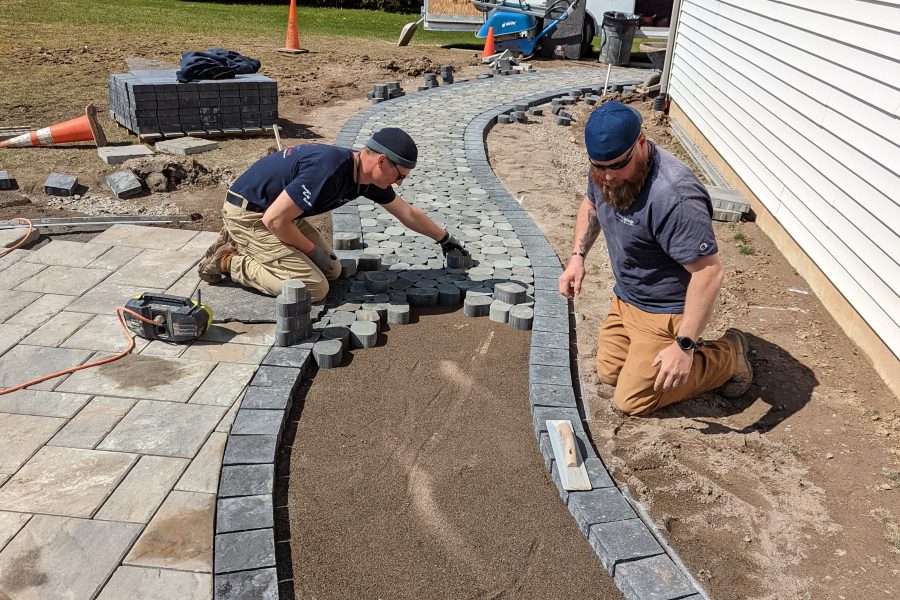
Grading vs. French Drain: Which Fix Does Your Yard Need?
If you’re watching water pool against your foundation after every rain or snowmelt, the instinct is to call someone and ask for drainage. But the fix that actually solves the problem depends on why the water is sitting there, not just where it ends up. For many yards in Syracuse, Cazenovia, Skaneateles, and across Central New York, grading is the right starting point because the surface slope itself is sending water the wrong direction. In other situations, a French drain is what handles persistent low spots, runoff from higher ground, or ponding along a patio edge that surface reshaping alone cannot touch. And a significant number of yards need both. Understanding which symptom points to which fix saves homeowners from paying for the wrong solution or leaving the real cause untreated through another freeze-thaw season.
Reading the Yard: Grading vs. French Drain Decision Points
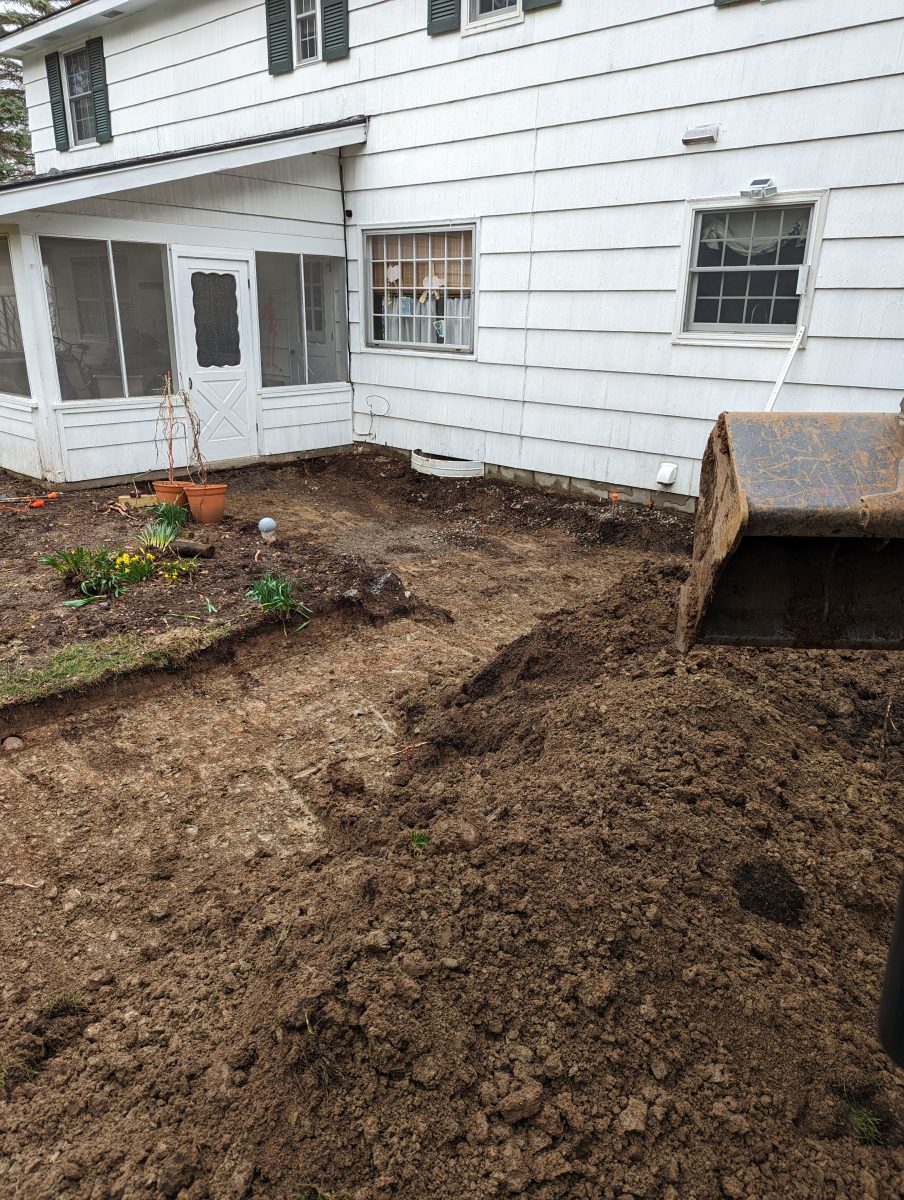
Grading is the right first remedy when the land surface itself is directing water toward the problem. If soil near the foundation has settled over time, if a lawn depression has formed in a low corner of the yard, or if the grade simply never sloped away from the house to begin with, then the fix is to restore surface flow in the correct direction. The goal is straightforward: water should leave the site over the surface before it ever has a chance to saturate soil next to the structure or collect in standing pools.
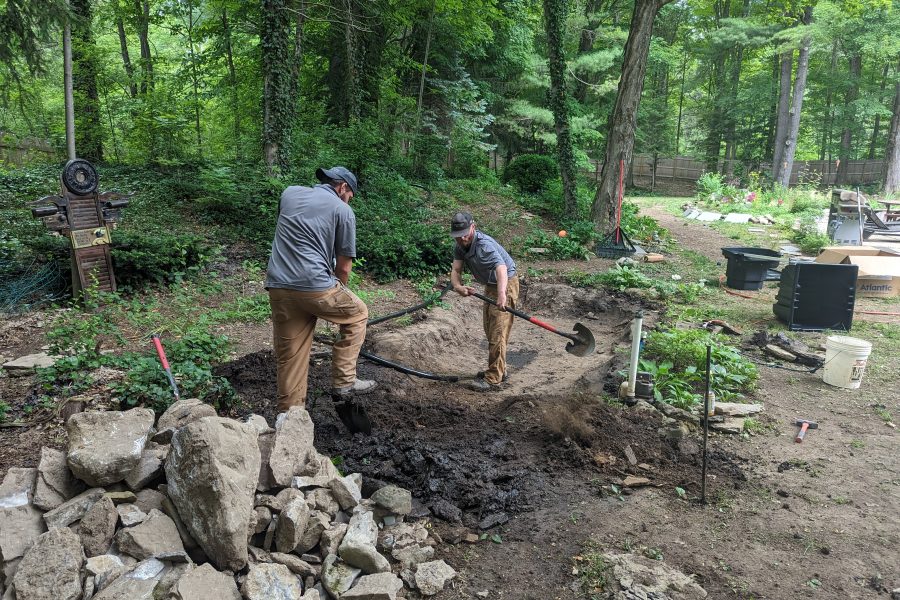
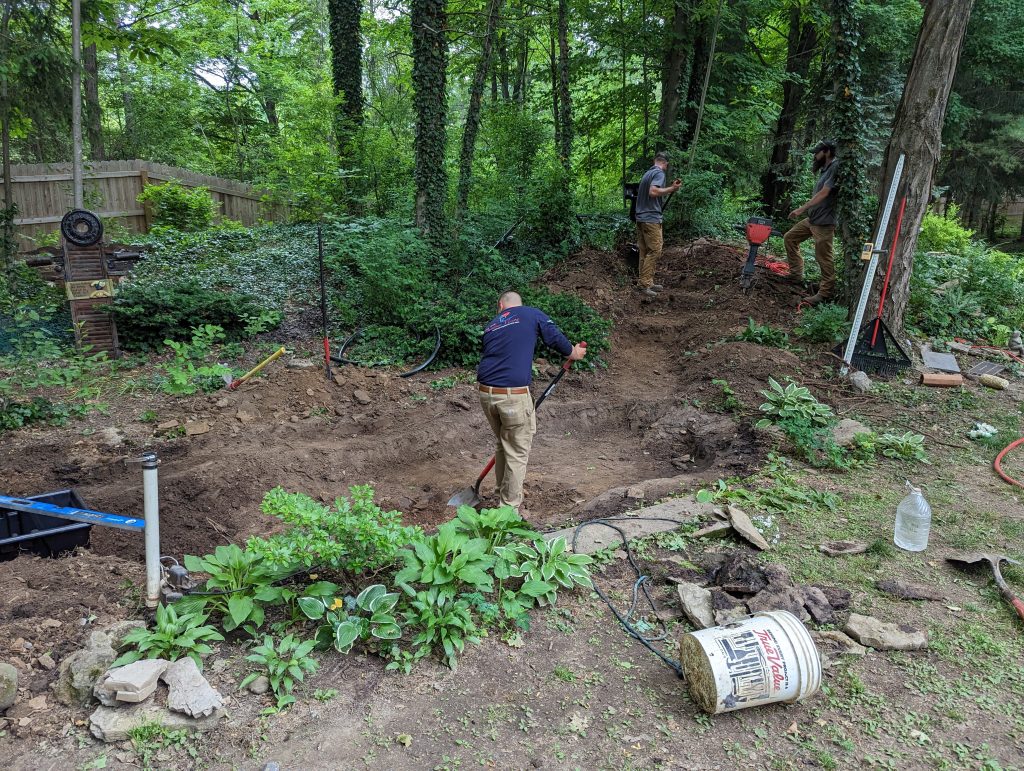
A French drain addresses a different condition. When water is collecting in a persistent low spot that cannot be reshaped without disrupting hardscape, structures, or existing grades, buried drainage becomes the tool. A French drain typically consists of a perforated pipe wrapped in rock and landscape fabric, installed below grade with a continuous fall toward a suitable outlet. According to the Building America Solution Center, this approach is commonly used under pavers, stone, turf, or mulch at low points where surface ponding cannot be resolved by reshaping the land alone.
The practical decision framework comes down to four common yard scenarios:
- Water against the foundation: Check the grade first. If the lawn slopes toward the house or soil has settled against the footing, filling, compacting, and regrading the surface is typically the most direct fix.
- Soggy low spot in the lawn: If the depression is small, filling and grading may resolve it. If the low area persists through every rain because water drains in from higher ground or hardscape redirects flow into it, a French drain becomes the better solution.
- Runoff from uphill areas or neighboring properties: Surface grading rarely solves an intercepted flow problem. A French drain installed across the path of incoming water is designed for exactly this situation.
- Ponding beside a patio, driveway, or other hardscape: Hardscape limits how much you can change the surface contour. A French drain installed at the edge or below the finished surface gives collected water a path out that regrading the surrounding lawn cannot.
Why Many Syracuse Yards Need Both
The either-or framing is one of the most common misconceptions about yard drainage. A site can require grading to create the proper fall across the surface and a French drain to collect and move remaining water to an outlet. According to the Building America Solution Center, the two approaches are routinely combined because correcting surface slope does not eliminate all the places where water concentrates, and buried pipe alone does not fix a yard that is actively directing runoff toward the house.
In practice, grading and French drain work in sequence: regrading establishes how water moves across the surface, and the drain captures what still accumulates at low points or transitions between grades. For finished landscapes around patios, retaining walls, or plantings, this combination is especially common because major surface reshaping around completed hardscape would mean disturbing finished work. Drainage design often needs to work with the grades that already exist, not start from scratch.
Diagnosing the Problem Before Choosing a Fix
Before committing to either approach, it is worth ruling out sources that make the symptom look worse than the underlying drainage problem actually is. Many yard wetness problems are worsened by gutters, downspouts, sump discharges, or drip-line erosion near the foundation. A downspout discharging directly against the house can mimic a grade problem, and a sump outlet that empties toward a low spot can keep an area perpetually wet regardless of how well the lawn is graded.
Timing matters for diagnosis in Central New York. Cornell Cooperative Extension guidance notes that spring is when the water table is closest to the surface, which makes drainage issues easier to confirm. In the Syracuse area, the combination of snowmelt, freeze-thaw cycles in late winter, and prolonged spring rain often reveals drainage failures that a single summer thunderstorm would not. A spot that holds water for more than a day after a normal rain event, or that drains at less than roughly one inch per hour, points to a real structural drainage problem rather than a one-time weather event.
The other diagnostic check is the existing hardscape footprint. If a finished patio, walkway, or retaining wall is part of the drainage picture, that affects how much can be accomplished with surface grading alone and usually means the conversation needs to include subsurface options from the start.
What Affects the Scope and Cost of Each Approach
Without knowing site-specific conditions, it is difficult to compare the two approaches on price, but a few factors consistently drive scope in either direction. For grading, the main variables are how much soil needs to be moved, how far it needs to travel, and whether settled areas near the foundation or under finished sod require excavation and recompaction before grading can begin.
For a French drain, the availability of a suitable outlet is often the determining factor. The pipe needs somewhere to discharge, whether that is daylight at a lower elevation, a storm sewer connection where permitted, or another approved point. If the outlet is close and accessible, installation scope stays manageable. If it requires running pipe across a significant portion of the yard or navigating existing hardscape, the project grows accordingly. Interference from patios, driveways, or plantings also affects how much hand work is involved versus machine excavation.
Frequently Asked Questions
Can a Syracuse yard need both grading and a French drain?
Yes, and this is a common outcome for yards where the surface slope problem and a persistent low spot or hardscape-adjacent ponding area exist at the same time. Grading restores the correct surface flow direction while the French drain handles collected water that the regraded surface still cannot move on its own. The two solutions are complementary, not competing.
When is the best time of year to diagnose yard drainage problems in Central New York?
Spring is the most reliable window. Snowmelt, late-winter freeze-thaw cycles, and persistent spring rain all keep the water table near the surface and reveal drainage weaknesses that may be less visible during dry summer periods. If a wet area holds water for more than a day after a normal spring rain, that is a meaningful indicator worth having assessed before it affects the foundation or lawn.
Will a French drain fix water next to the foundation if the yard still slopes toward the house?
Not reliably on its own. If the grade is directing surface runoff toward the house, a French drain captures subsurface water but it does not intercept the continuous inflow that poor grading creates. In that scenario, correcting the surface slope is the foundational fix. A French drain can complement it, but it is not a substitute for getting the grade right first.
Talk to Hunter Springs About Your Drainage Situation
If water is pooling in your yard, against your foundation, or along a hardscape edge after every rain or snowmelt, Hunter Springs Landscape Artisans provides drainage and grading solutions for residential properties throughout Syracuse, Cazenovia, Skaneateles, Manlius, Fayetteville, Chittenango, Camillus, and the broader Central New York region. Getting the right diagnosis first makes a real difference in whether the fix holds through another winter. Call (315) 682-5552 to discuss what you’re seeing in your yard and find out which approach makes sense for your specific site.