How to Compare Paver Walkway Quotes
Most homeowners shopping paver walkway quotes in Syracuse and Central New York focus on the surface: the paver style, the color, the pattern. The decisions that actually determine total cost, long-term performance, and whether two quotes are even comparable sit below the surface. Excavation depth, base construction, compaction, edge restraints, drainage corrections, demolition of an existing walk, and whether the project touches public right-of-way can all change the number significantly. Online price ranges for paver walkways in this region conflict widely, partly because they reflect different scopes rather than different rates. This article walks through the cost drivers and quote-comparison mistakes that lead to price shock on paver walkway projects in Syracuse, Cazenovia, Skaneateles, Manlius, Fayetteville, and throughout Central New York.
What Homeowners Usually Compare vs. What Actually Drives Cost
The most common mistake when reviewing walkway estimates is treating the paver product as the main variable. Retail paver materials in New York run roughly $4.50 to $6.00 per square foot before anything else is included. That figure does not reflect excavation, base material, compaction, edge restraints, jointing sand, cuts around stoops or planting beds, spoil removal, or labor. Two contractors can quote the same paver from the same manufacturer at dramatically different totals because one quote covers full base construction and the other does not.
Third-party pricing content for New York markets places installed paver work in the low-to-mid $20s per square foot for typical residential work, with higher numbers once complexity increases. But some estimator tools published online show much lower figures. Those figures are unreliable as planning numbers unless you can confirm the scope they include. Installed price and material price are not the same thing, and the gap between low and high bids almost always lives in what is beneath the pavers, not in the pavers themselves.
Why Base Prep Is a Non-Negotiable Cost in a Hard-Freeze Climate
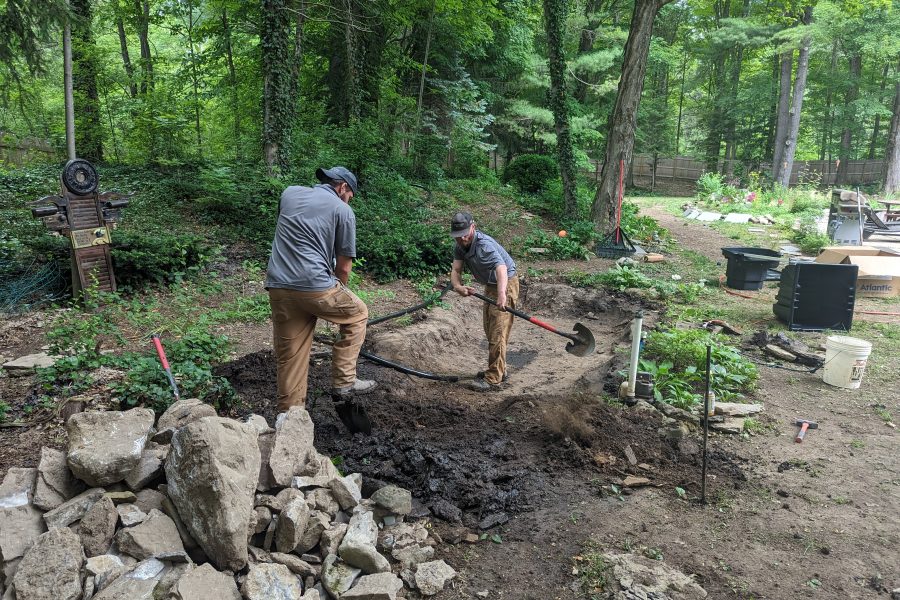
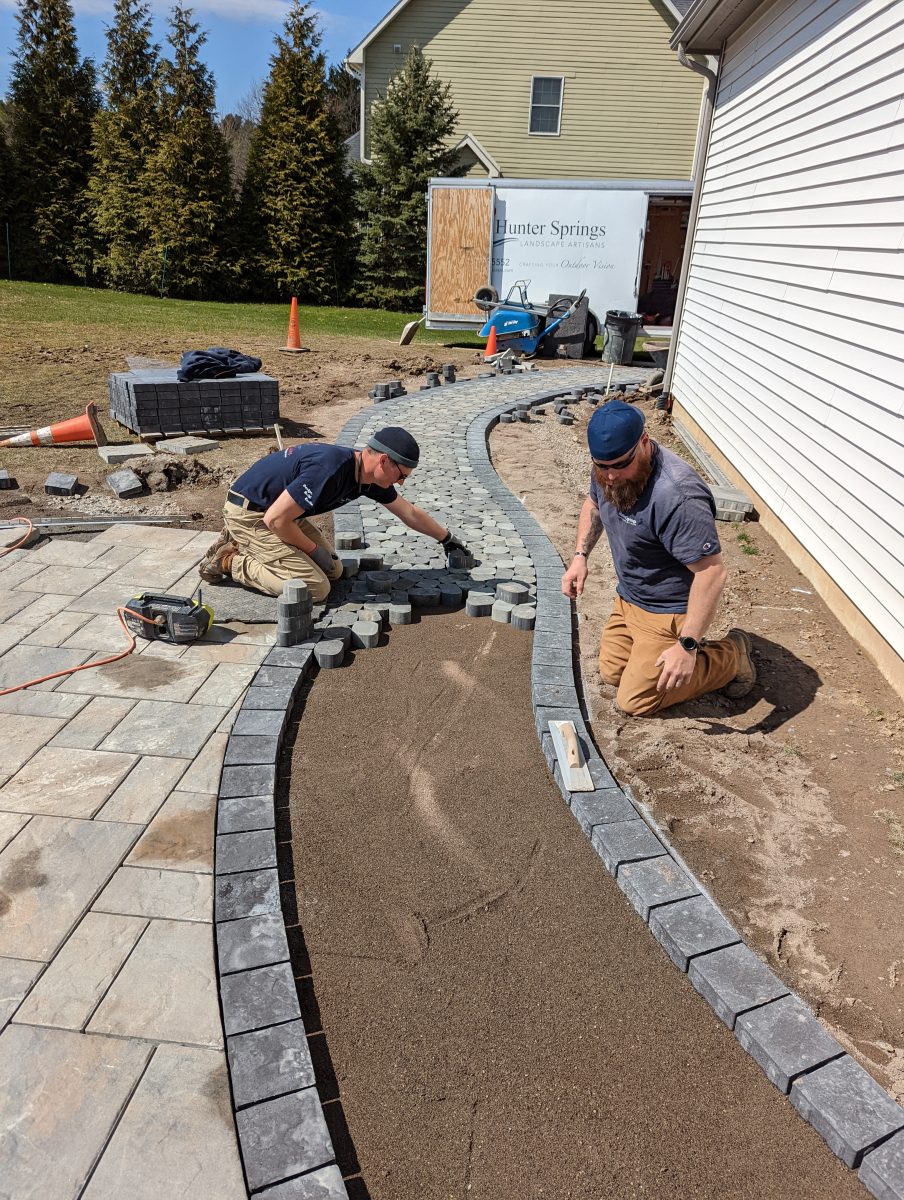
Central New York’s freeze-thaw cycle is not a background detail on a walkway project, it is a core engineering constraint. Industry guidance from the Interlocking Concrete Pavement Institute notes that paver joints are designed to allow movement through freeze and thaw cycles, which is why the system performs differently from a monolithic concrete slab. That built-in flexibility only works when the base is constructed correctly. ICPI consumer guidance calls for a minimum four-inch compacted base that extends at least six inches beyond the edge of the walkway, so the base supports the entire installation rather than just what is visible.
When base depth or compaction is reduced to lower a quote, the system loses its ability to absorb frost movement without shifting, tilting, or separating at the joints. Repairing a walkway that has heaved or spread after two winters can easily approach the cost savings that made the lower bid look attractive. Excavation and base construction are where the structural durability of a paver walkway is either built or skipped.
Edge Restraints and Drainage: The Scope Items Most Quotes Underexplain
Edge restraint failure is one of the most preventable paver problems and one of the most common. The Concrete Masonry and Hardscapes Association specifies that edge restraints must remain stationary under both installation forces and freeze-thaw movement, and that soil backfill alone does not qualify as a proper restraint. When edge restraints are downgraded or skipped, pavers migrate outward over time, joints open up, and the entire walkway begins to spread. That is a structural repair, not a cosmetic one.
Drainage correction is a separate line item that often surprises homeowners. If a walkway runs through an area where water currently pools or drains poorly, that condition does not solve itself once pavers are laid on top of it. Correcting grade or adding drainage before or during installation adds cost, but ignoring it means the new walkway sits in standing water through the thaw season and fails faster. If you are comparing quotes and one of them lacks any mention of drainage assessment, that is a scope gap worth asking about directly.
Other Costs That Inflate the Final Number
Several line items are easy to overlook when budgeting a paver walkway, and they tend to surface only after a contract is signed or a problem develops later:
- Demolition and disposal: Removing an existing concrete or asphalt walk, breaking it out, and hauling the debris adds real cost that is sometimes left out of an initial proposal.
- Complex cuts: Curves, angles, and tight fits around stoops, stairs, or planting beds require more cuts and more time. Simple rectangular paths cost less per square foot than detailed entry walks.
- Steps: Any grade change requiring steps adds material and labor that is priced separately from the flat walkway area.
- Site access: Narrow side yards, fencing, slopes, or limited equipment access affect how efficiently base material can be delivered and spoils removed.
- Right-of-way and municipal tie-ins: Front walks that connect to or disturb public sidewalk or curb area can trigger permit fees. The City of Syracuse’s 2024 fee schedule lists brick paver disturbance in the right-of-way at $7 per square foot with inspection fees starting at $100, and additional charges may apply depending on the scope of the work.
How to Compare Walkway Quotes Without Getting Burned
Paver brand and color are the easiest things to compare across bids, but they are rarely where the real differences live. When reviewing proposals for a paver walkway, ask each contractor to specify:
- Excavation depth and what happens to the spoils
- Base material type, compacted depth, and whether it extends beyond the edge of the walkway
- Compaction method
- Edge restraint type and how it is fastened
- Jointing material and method
- What is explicitly excluded: demolition, drainage, steps, permits
These are the variables the ICPI identifies as core scope items on a properly built installation. A contractor who can answer each one specifically gives you a basis for comparison. A vague answer to any of them is itself useful information.
Hunter Springs Landscape Artisans offers free on-site and showroom estimates for walkway projects, with design-build estimates typically delivered within one to two weeks depending on project size. All hardscape work is backed by a 2-year hardscape warranty, which is a practical comparison point when two proposals are priced differently and the scope is otherwise equal.
Schedule Your Walkway Installation Estimate
If you are planning a paver walkway for a home in Syracuse, Skaneateles, Cazenovia, Manlius, Fayetteville, or anywhere across Central New York, NY, the clearest next step is a site visit to scope the actual conditions. Hunter Springs Landscape Artisans provides free estimates and can walk through base requirements, drainage considerations, and what your specific site will require before any numbers are discussed. Visit the Walkway Installation page to learn more about the service, or call (315) 682-5552 to schedule your estimate.